Having trouble with your doors not closing properly? Do you live in Los Altos and need door repair? If so, you have come to the right place.
Doors are critical for security between you and the outside world and for privacy for occupants within a home. Even a small home can easily have 9 to 12 doors. These can range from the front and rear exterior doors, doors to the garage, inside doors between rooms and hallways, and into bathrooms and other areas. Types of doors include: entry, interior, closet, pocket, sliding glass, French, screen, and garage doors.
These doors all have to open and close smoothly and quietly as well as rest in their frames securely. Latches and locks need to be correctly aligned to work properly as well. This article will only discuss repairs with the most common doors, entry and interior.
DOOR NOT CLOSING
Doors not closing are one of the most common issues but can have multiple root causes. Here are some common ones.
Hardware Not Properly Secured
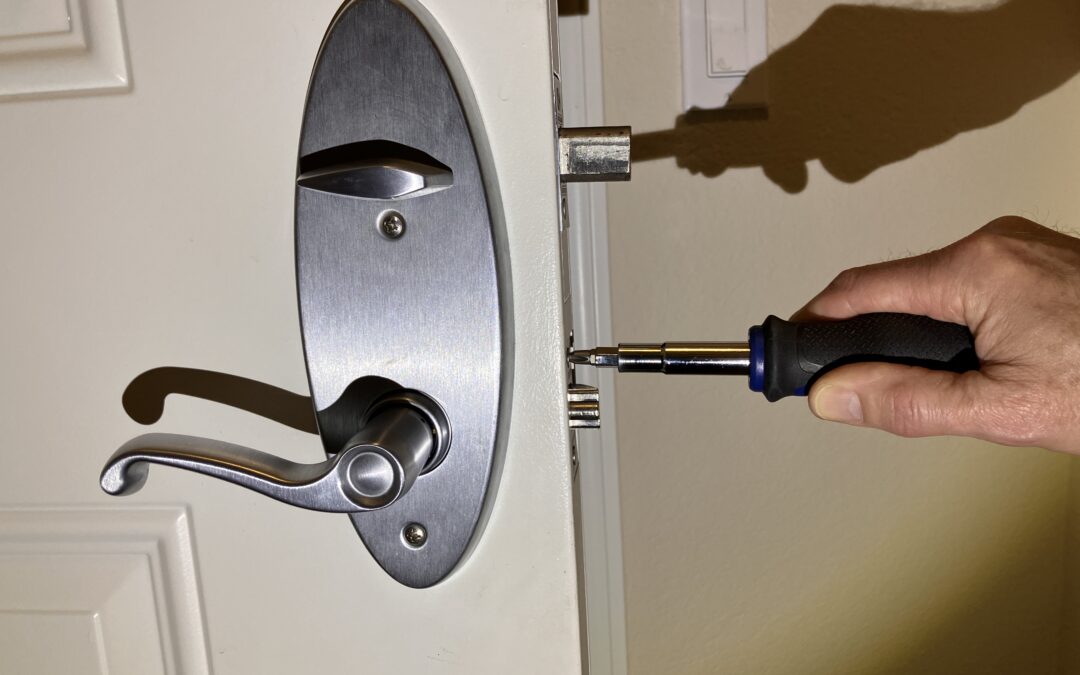
Residential doors commonly have 2-3 hinges, latch or strike plate, face plate around the latch bolt, and the door knob. Do a scan of all the screws on this hardware and the gaps around the door. Make sure all the screws are set properly with a screwdriver to fully secure the door to the frame. Also check that the door fits in the frame with a uniform gap of approximately 1/8” on top and sides and 1/2” on the bottom.
Door Hitting Side on Top Opposite Hinges
Over time gravity and/or added loads hanging on the door will pull the door down on the latch side. The upper side opposite the hinge usually binds and the door won’t close or will bind causing paint to rub off.
This can occur because many modern doors and frames have been constructed of very soft wood or MDF allowing screws to strip easily. Carefully check the top hinge screws with a screw driver to see if the screws are tight or if they are stripped and just spin.
To correct this, install longer screws into the frame side of the hinge or glue in some small dowels (skewer sticks) into the existing holes to better hold the original short screws. On the door side, with hollow cores and thinner wood, dowls and glue should be inserted into the screw hole to give the screw something to hold onto and set tightly.
Door Hitting the Floor
It’s best to have a 1/2 inch of gap between the bottom of the door and floor or carpet. When the door hits here it’s usually because the original gap was not adequate and the structure shifted or a new floor was added and the door gap was not adjusted. Door sag or home shifting over time likely caused the door to hit. As long as all the hinges are secured, this issue can be resolved by measuring a ½” gap at the bottom of the door and trimming the door to the line.
Door Difficult to Close Last Few Inches
When a door is hard to close the last few inches or bounces back from latching it’s likely binding on the hinge side. Assuming there is extra room on the latch side, a simple fix is to add shims under the hinges where it attaches to the door frame. These should only be 1/32” to 3/32” thick and can be purchased or cut from thin plastics at home.
Door Hitting Top of Frame
A door hitting at the top is less common. For this issue sanding, plaining, or cutting the door with a circular saw is all that is needed. Just make sure to check the gap width before removing the door and measure carefully before adjusting to finish up with a uniform gap when done.
Door Hitting Sides of Door Frame
Double check to make sure all the door hinge screws are secure and not stripped. Shimming hinges in the appropriate locations and reinstalling secure screws will typically resolve the issue.
Door Latch Bolt Hitting Latch Plate
This is due to the latch plate screws being loose or some other misalignment which is discussed below.
DOOR NOT LATCHING PROPERLY
Not hearing the nice clicking sound of engagement when the latch bolt enters the latch plate? Again, start with checking the gap around the door circumference and for loose screws. If something is off here, the fix may correct the latching issue. If not, move on to the detailed issues and solutions below.
Strike Plate Hole Not Aligned
Confirm the strike plate screws are secure and check for scratching on the latch plate. You may have to eyeball this as well but if the latch plate hole needs some small adjustment, a file or Dremel tool may be used to make the hole slightly larger.
Door Jiggles When Latched
This occurs when the latch bolt clicks into the hole correctly but the door moves slightly while closed. It can be annoying when this occurs repeatedly due to airflow pressure changes in the home, typically when the heater starts and stops. Correction is easy though. Just adjust the little tab inside the latch plate hole by leveraging it out with a screwdriver.
OTHER DOOR ISSUES
Door Swinging Open/Closed
If your door won’t stay put when open, moving in or out on its own, there is likely an issue with the frame not being plumb. Correcting the plumb issue is not worth the trouble. Instead, friction needs to be added to the hinges. This can be done by tapping the hinge pins in a bit (if not fully set). If more friction is needed, the top pin can be removed, tapped with a hammer to add a slight bend, and reinstalled.
Squeaky Hinges
While annoying, this is one of the easiest issues to resolve. Just remove the hinge pins one at a time, lubricate, and reinstall. Silicon spray or light oil works well. Only remove one pin at any one time. But if you only have 2 hinges on the door, it’s best to shim the outer edge of the bottom of the door to keep it secure.
How Much Does Door Repair Cost in Los Altos, CA?
I’ve repaired many of these door issues. That’s why I recommend you contact Foothill Repair Pro by clicking the link below. I’ll get back to you within 24 hours with a free quote and an opportunity to get on my schedule.